Wednesday, April 6, 2011

Sea Shells by the Sea Shore

As I prepare for my departure to Hong Kong next week I needed to get my ducks in a row and carefully plan my specials for this and the next two weeks, as well as an upcoming menu change, making my disappearance go as unnoticed as possible.

I'm lucky that we're in the budding months of spring to inspire me in these times of need, but as the winter was winding down I developed the foundation for this dish, giving me a head start to all of the new dishes that I have to conceive.

I've been wanting to create a compote composed of green apples, dates and some of our great bacon from Bavarian Meats, which would, of course be a great accompaniment to pork, like one of my favorite preparations: pan roasted pork tenderloin; the ultimate in flavor, price and presentation. How could I go wrong??

I was planning on adding spring onions that I braised in red wine, but even though the spring onions weren't up to par to add themselves, the resulting liquid had the exact acidic balance the compote needed, so I drizzled it in instead.

Looking forward to the season I countered the sweet and sour compote components with the buttery, slightly bitter leaves of  Bloomsdale spinach, an heirloom variety that I sauteed in a mixture of white wine and stewed spring onions and garlic in olive oil.

The dish needed a final touch, and some might actually feel that it would be missing a sauce, so I blended some preserved Meyer lemons that I started a month ago as the base of a classic aioli. The preserved lemon gives the sauce another dynamic layer of flavor... the new reason why we preserve them in the first place.


I put a lot in this week's cocktail. A lot of time, a lot of thought and a lot of hard work. Do you know what's the worst thing about putting so much effort into one idea? the chance it will all crumble into an epic failure.

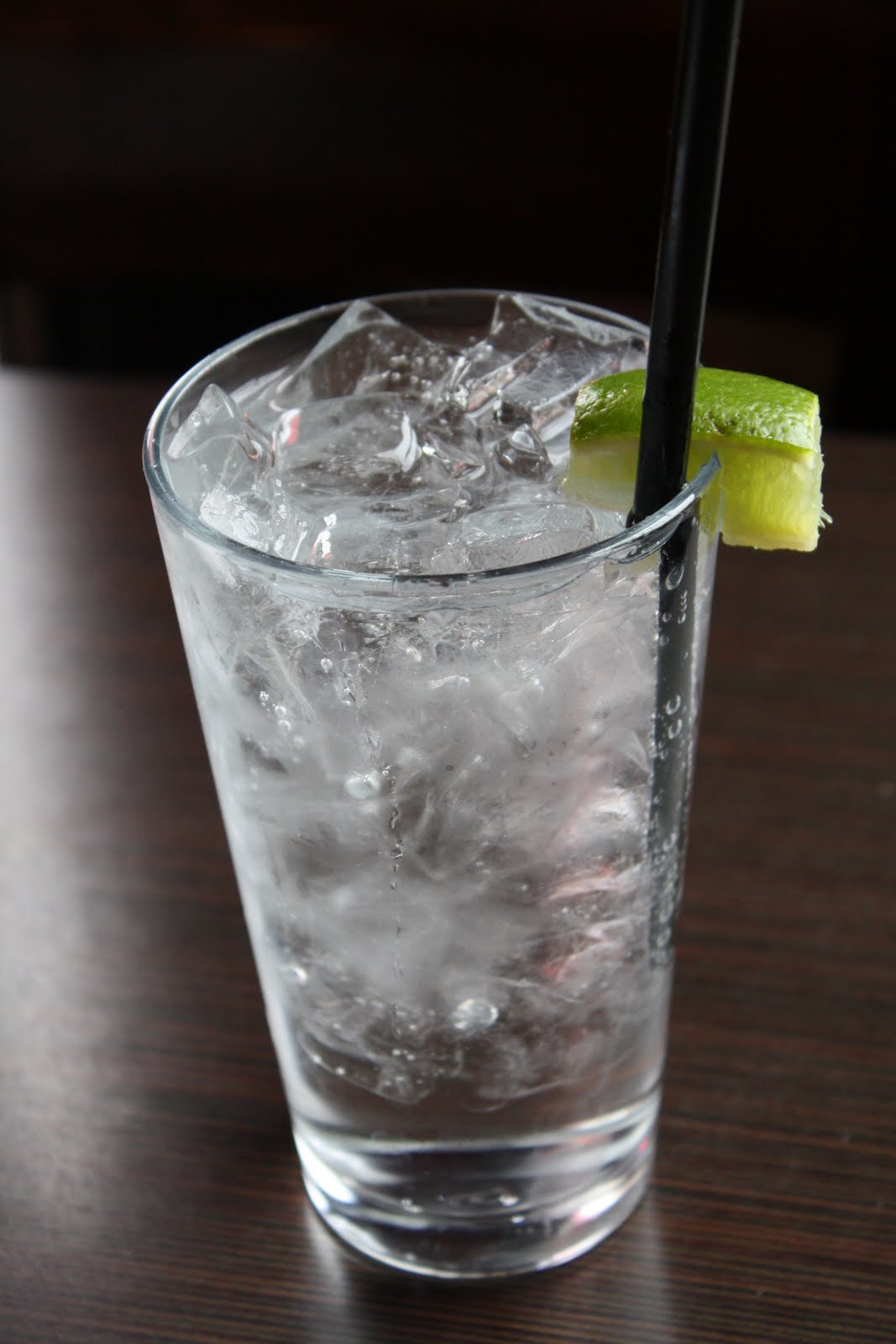
I've been wanting to make my own gin every since my re-introduction to it with a gin sampler in Portland last year, so I tinkered around with infusing a vodka with the standard juniper berries as well as a few of the flavors from my tasting like lavender, lemongrass and ginger. But even though I make my own gin, it's characteristics could go unnoticed; that is unless I pair it with something else I made, like my own tonic water, for instance.

It's the tonic and not the gin that has left a bad taste in my mouth after all of these years, and unlike most spirits, there isn't much variety when it comes to tonic, so I had the opportunity to create my own after reading a blog on handmade tonic using citrus, allspice, lemongrass and cinchona bark for that essential quinine flavor. Both had to be distilled in order to clarify them, otherwise I would have a reddish/brown concoction that no one would believe was a gin and tonic.

In the end, I was more nervous about this drink than any other because how discriminating gin enthusiasts are (just like scotch or whiskey drinkers), but after one regular's comments along the lines of "as good as a top shelf London gin" that he enjoys, my fears subsided... not to mention the fact that one of the two bottles of gin that I made were already gone by the end of Tuesday night --- as in half priced WINE night. If a cocktail sells that good on a wine night, then I must be doing something right!!

With Love,

Cheffrey

Wednesday, March 30, 2011

Noodle Love

How many different noodles can I make? Oh, let me count the ways....

Sure, there are the Italian varieties, but I only count them as one. Then there's lo mein, chow fun, dumplings, egg noodles, flower and water noodles, and of course there's all of the different mac 'n' cheeses. But what about the Japanese buckwheat noodle, soba? What about yakisoba??

Though the popular dish yakisoba doesn't actually mean that it contains soba noodles, referring instead to a sauce that is like a sweet, thickened Worchestershire sauce, I realized that if I combined the two I could come up with something special.

Buckwheat is actually of no relation to wheat, nor does it contain any gluten like wheat does, but in order to help the dough stay together I did end up adding some traditional flour, but on the underside of a 2 to 1 ratio.

The sauce stayed relatively true to tradition by combining soy sauce, rice vinegar and Worchestershire sauce, but while most recipies call for mirin - a sweet rice wine - I used a common dry, white grape wine that I sweetened with local buckwheat honey, which gives the sauce a unique and distinct flavor.

All yakisoba dishes tend to have the some of the same types of ingredients that you would find in, say, generic fried rice, like mushrooms, frozen peas or cabbage, so to stay true to those ingredients I went with shitaki mushrooms, julienned snow pea pods and chopped local, organic swiss chard.

While I could have added a protein directly to the noodles to make it much easier on myself, I felt that a separate fillet on top like wild Coho salmon would play an integral correlation to the Worchestershire base of the sauce, and since I didn't use the mirin wine, I felt that reducing mirin into a syrup to brush the roasted portion of salmon like a glaze would really tie the dish together.


Now that we're officially into spring I'm starting to see some of those season specific vegetables become available, like spring onions and garlic, fava beans, English peas and rhubarb.

That's right - the ingredient most commonly used in desserts like pies is actually a vegetable. And not a fruit that most consider a vegetable like bell peppers or even tomatoes, but a sour, how-did-they-ever-figure-out-how-to-cook-this-as-a-dessert vegetable. Luckily sometime, somewhere someone realized that it went very well with strawberries, thus leaving us with an iconic pairing.

Even though I have yet to use rhubarb in one of my main dishes, I do find that it does make tasty cocktails, especially chopped up to infuse some rum, where its natural sweetness helps breakdown the sour and bitterness of the vegetable.

To fulfill the other half of the pairing I simmered whole strawberries in water until they create a syrup that I helped sweeten with some of the buckwheat honey to bridge the two specials together and create an underlying flavor that gives a little more dynamic to the drink.

To help lighten the drink I implemented one of my favorite new techniques: the champagne float. It gives the bubbles that club soda would without diluting the flavor or alcohol content... hehehe!
 

With Love,

Cheffrey

Wednesday, March 23, 2011

Toys in the 'Hood

Recently, I moved from my condo in Eastlake to a house in the U District. One of the best things about moving is exploring your new neighborhood and all that it has to offer. Lucky for me there's a surplus of good, cheap food and watering holes there.

My first venture out drinking was a stop at Die Bierstube on Roosevelt, a short walk from my new home. Naturally I was weary; after all, I just moved further away from the great Feierabend in South Lake Union, but I was confident that they'd have my favorite dunkel, or dark style of beer that is still very light. Not only did they have one (and a wheat dunkel to boot!!), but an intriguing concoction macerating in a large jar above the register that turned out to be a house-made "whiskey". While I wouldn't go as far as to call it a whiskey it was indeed tasty, and inspired the base of this week's cocktail special.

The jar was a little far for me to make out everything inside but I did notice golden raisins, so the next week at work I started a simple infusion with the raisins and vodka, leaving me a couple of weeks to figure out the rest until it was ready.

Since it's officially spring I wanted light and bright flavors for this, so I started by muddling fresh mint and ginger, added the golden raisin liqueur and topped it all off with a float of sparkling wine. I call it:

"The Raisinette"!


Since we're just on the other side of spring I get to showcase the best of both worlds - the deep earthiness of winter interwoven with the softness of spring. Some of my best dishes have come out of these intersections of inspiration, and I'm really happy with the way that this one came out.

For some reason I've been really fixated on the idea of a dish with fried brie lately, so I cut discs out of a wheel that I then coated with egg and panko breadcrumbs to be fried as a topping to say, a steak, so that the cheese oozes out when you cut into it like a broken yolk and coats the meat like a sauce.

I initially wanted to try out a buffalo flat iron steak from my specialty company, but when that turned up unavailable I had to scramble Tuesday morning before deciding on an interesting cut of beef called a top sirloin from just above the tenderloin, and I even found an Angus breed version that has more flavor and tenderness. I carefully cut the meat into thick portions that tend to naturally sway on the triangular shape, which made a good visual contrast to the circular brie.

For a vegetable I used some beautiful, locally grown rainbow chard, a green that has a variety of colored stems that also give the leafy vegetable good body even when finely shredded and sauteed in a little butter, onion and garlic.

To compliment the colors of the chard while countering the richness of the brie I roasted red and golden beets and peeled them before pureeing with red wine and champagne vinegar respectively along with a little sugar to give me a duo of sweet and sour sauces to balance the plate.   


With Love,

Cheffrey

Wednesday, March 16, 2011

Green with Envy

St. Patrick's Day is here on Thursday, though I don't think that many of you reading this will end up being dragged out of a bar by friends at the end of it, but I've been surprised before!!

For those of you who are looking for an alternative to puking up green beer, I have just the thing for you!

This week I'm continuing with my twists on the traditional corned beef and cabbage dish like the previous years while keeping with the spirit of the holiday.

For this year I wanted to do something unusual and create an interpretation of our own dish, the 219 Benedict, which is already a take on the classic by dicing the Canadian bacon and adding it to cooked, grated potatoes along with smoked gouda and scallions that we then top two with poached eggs and a creamy tomato and mushroom sauce.

The funny thing that people don't see about restaurants is the way we cooks snack on the food you enjoy, but in a different way. Take the Benedict for example: there's always an odd ball (literally) leftover that brunch chef Alejandro likes to deep fry for himself. This combination reminded me of corned beef hash, another item on our brunch menu, and the rest just fell into place.

Corned beef has nothing to do with corn; it actually refers to the kernel-sized salt that was once used to cure beef brisket. I used to make our own, but due to a shortage of refrigeration I couldn't just let forty pounds of beef cure in there for a week at a time, so we started buying it made locally by our sausage company, Cascioppo Brothers, which may not be as good as mine (hehehe), but it's pretty damn good.

After a long, slow cook in just enough water to help the meat stay moist it's left to cool overnight so that it's firm enough to dice finely. Meanwhile, I simmered peeled, whole potatoes until just done and allowed them to cool completely before grating them by hand and tossing in chopped scallions, eggs and the corned beef. I shaped them into three, three ounce eggs.

Why eggs? Why not!!

You can't have corned beef and cabbage without the cabbage, but I really don't like the time it takes to braise traditional white cabbage, let alone the stinky sulfur it can give off, so I went with a new favorite: napa cabbage sauteed in butter, onions and garlic, yellow and black mustard seeds and chopped parsley. Perfect.

I also prefer a little nice mustard to go with my CB&C, plus the dish needed some moisture in form of a sauce, so I simmered a stock with the usual suspects: parsley stems, bay leaves, onion, garlic and peppercorns to name a few, and then I added an equal part of white wine and reduced it until almost dry before adding heavy cream and seasoning it. The sauce is then strained and, once reheated to order, finished by stirring in a heaping tablespoon of Dijon mustard.


I thought long and hard about what kind of drink to offer this week. I wanted to focus on the two most commonly known Irish beverages; either Guinness or an Irish Whiskey like Jameson, (but don't think I don't know about the others, like Poitín, aka Irish moonshine).

After an experience at an Irish bar in Brooklyn, NY I realized that there are some people in this country that prefer to drink a certain spirit distilled in a certain region of a country by a certain religion, like Jameson, believed to be made in southern Ireland by Catholics, and Bushmills, which is produced in Northern Ireland and thought to be produced by Protestants (and possibly the world's oldest licenced distillery in the world) - one of stupidest forms of ignorant bigotry that I've come across... and I've seen a lot!!

Bigotry aside, I personally prefer Jameson whiskey for taste alone, so after researching cocktails containing Irish whiskey I came up with an ingenious name for a drink that also helped form it's foundation.

The Irish Redhead!!

I filled a pint glass of ice 3/4 full with Jameson's (hey, some stereotypes are for a reason; we do love our booze, after all..) and added honey, fresh lemon juice and egg white powder that I shook vigorously and finished with club soda. To help balance the drink and solidify its moniker I topped it with several dashes of Peychaud's bitters that were stirred into the foam created by the egg white powder, giving it a red-hued float!


Chicago can keep the green dye for their river; I prefer red!!

With Love,

Cheffrey

Wednesday, March 9, 2011

The Clouds of Heaven

With the first sign of spring vegetables starting to show their heads I realized that I need finish showcasing my winter dishes now if I don't want put my ideas on hold until next year, chancing that they'll get lost forever.

If I've said before that I love pasta, then I'm a stalker for dumplings. There's just something magical and mysterious about biting into a shrouded filling bursting with flavor. While there are many great dumplings from cultures around the world to choose from, I decided to go with more of an Asian style, with some of my own twists.

I made a filling by enriching ground, raw shrimp with pancetta that I blanched in water to tenderize it as well as to remove the excess salt, reserving the liquid for the base of my broth. For the dough I used the same shu mai wrappers that we fry for our tuna tartar tacos on the menu, but by boiling them instead of frying, they become light and pillowy, like little clouds from Heaven.

I used the leftover shrimp shells to fortify the pancetta broth, and for an even more intriguing flavor I simmered the whole lot with Szechuan peppercorns - tiny, dried berries with strong citrus notes that are commonly used in the Sichuan region of China, where it was realized long ago that the mouth-tingling properties of the peppercorn plays extremely well with the spiciness of hot chiles, so I added a few pinches of ground chile de arbol and a subtle amount of soy sauce for salt and umami.

Another classic pairing for Szechuan peppercorns is eggplant, so who am I to argue? I sauteed up small rings of Japanese eggplant with onions, garlic, ginger and soy sauce. While the eggplant gives some heft to the the dish, I needed another dimension and some green to boot, so while I was at Uwajimaya picking up the eggplant I also grabbed several bunches of watercress, one of the oldest known leafy greens consumed by man and one of my all time favorite greens (though long neglected in my recent repertoire). Its peppery flavor really lent a hand to the flavor profile of the total dish, playing off of the peppercorns, eggplant and broth.


After my recent purchase of orange bitters for the Orange Apricot Punch a couple of weeks ago my mind has been reeling with ideas. I remember talking to one of our servers, Justin, about how well orange goes with whiskey, like the way we muddle orange slices and maraschino cherries with Basil Hayden bourbon to make our signature Old Fashioned, which led me to this other variation to a classic cocktail.

I thought that since whiskey goes so well with orange I felt that I could make a version of a Manhattan by using rye whiskey instead, since it has many of the same characteristics as bourbon. I used Grand Marnier orange liqueur in place of the sweet vermouth and, of course, aromatic orange bitters instead of the traditional, well, bitter variety. The final cocktail was a HUGE success on its first night alone, so I'm excited to see how well it does the rest of the week!!!


With Love,

Cheffrey

Wednesday, March 2, 2011

New Directions

We've all heard the trendy culinary catch phrases before, like: "fat is flavor" and "everything is better with bacon". It is easy to fall back on these go-to ingredients for guaranteed good taste, but the true art of the craft comes when you work outside of these parameters to create something that is considered dull and flavorless into an intriguing dish that makes even a carnivore raise their eyebrow with interest.

I'm writing of course about tofu, which is essentially cheese but made from soy milk that's used as a meat substitute, though even some vegetarians find it boring. I've used a lot of it at home in order to eat healthier, but I must admit that I hated it in the beginning, but like anything that's difficult - if it was easy everyone would be doing it.

So I started my dish by marinating blocks of extra firm tofu - I find anything softer to be off-putting to those weary of tofu already - in a blend of olive oil, shallots, garlic and dried herbs de Provence, with an emphasis on the dried because after a few days marinating the tofu is marked on the grill, creating a wonderful char and smoky flavor that can't be achieved by fresh herbs alone.

To go with the bold flavor of the tofu I needed accompaniments that were equally as strong. While it may be presumptuous to think that vegetarians and vegans are missing out by omitting bacon from their diet, it is a fact that braised winter greens are greatly enhanced by the addition of it, so to split the difference I used a single malt scotch from Islay, which has a very smoky characteristic of its own, inspired by the flavors I got out of a dish at the Black Bottle (who's waiter said that there was no scotch added). The scotch flavor is assertive yet pleasantly familiar; not an imitation of bacon but an excellent alternative to it.

Lucky for me portobello mushrooms were available at a great price this week, and since they are commonly used in vegetarian dishes due to their meaty texture, I used them here to help give more sustenance and take on  flavor.

Mushrooms in general are like sponges, absorbing liquids with little effort.This knowledge led me to the addition of a marinade with the same foundation of olive oil, garlic and shallots but with the addition of mustard and fresh rosemary; both great pairings to the portobello. After several hours of absorption I roasted the large caps upside down so that the remaining marinade with continue to seep in.

Now that I had a foundation with the braised greens and the mushroom I needed something to finish it on top. Typically a sauce is used here, but since the center of the tofu is already soft and creamy, I went in another direction.

I had this idea for a Mediterranean "salsa" comprised of cherry tomatoes, shaved fennel and minced black, oil-cured, Moroccan olives that I seasoned with freshly chopped herbs like marjoram, oregano, parsley and chives along with a dressing made of preserved Meyer lemons and oil. I lean towards "salsa" as opposed to "salad" for this because sometimes customers tend to think that a salad is something comprised of lettuce.


I have been wanting to re-introduce a cocktail using cinnamon-infused tequila every since the outstanding success of the Cinnamon Pear Martini that utilized poached pears in two ways by churning the cooked pears into a sorbet that is floated in a mixture of the poaching liquid and cinnamon-infused tequila. Despite the quick time that the cocktail sold out and the many requests to put it on the menu I ultimately decided against it due to all of the processes that go into making and executing the drink. This is my attempt to rectify that dilemma.

For the past few weeks I have been steeping whole cinnamon sticks in Cuervo tequila, bringing even more complex flavor to an already interesting spirit, one that is only enhanced by the addition of the sweet and sour elixir of freshly juiced granny smith apples (aka green apples). With just a few dashes of bitters and a few shakes over ice the mixture is strained into a martini glass to make a more formidable version of the original, but with a great enough flavor to stand alone.


With Love,

Cheffrey

Wednesday, February 23, 2011

It's About Time!

Sometimes it takes a while for a good idea to form. Sometimes a good idea forms instantaneously. And sometimes a good idea has to wait its turn.

Last summer I was researching recipes when I came across a cookbook by one of my favorite chefs, Charlie Trotter, where he had a dish that featured a mustard pasta. At the time I had just made a lemon flavored pasta and was very interested in infusing flavors into pasta and I quickly came up with this dish, tucking it away until a season where it would be more suitable to offer a rich braise.

My initial plan was to offer it sometime in autumn, the nearest time I could, but something kept coming up; maybe I wanted to take advantage of an seasonal ingredient that was available for a short period of time, or I had a different pasta idea, or I wanted to save such a good idea until just the right time... The next thing I knew it was seven months later and I'm finally getting to it.

The pasta is made by mixing stone ground mustard and eggs with all purpose flour and some wheat gluten, the pure form of the protein in flour that helps hold the dough together. I used the gluten to fortify the pasta to compensate for the added moisture that the mustard brings. Not only does the pasta have a wonderful flavor but it is also a beautiful golden color with specks of the whole mustard seeds.

To stand up to the robust pasta I needed ingredients that were no slouches themselves, so first I braised cubes of wild boar leg meat in a combination of rich pork stock and a hearty tomato sauce, and then roughly shredded the meat while the sauce simmered once again with red wine and fresh herbs like parsley, oregano and marjoram. There is enough of the light gaminess of the meat to shine through the pasta yet it is subtle enough to meld into the dish.

Another component that I added was broccoli rabe, or rapini, which is a pungent and bitter green that resembles a leafy broccoli. Its distinct flavor is a perfect match for the strong pasta and rich boar ragout. And to finish the dish and help thicken the sauce I tossed in a handful of Pecorino cheese (think Parmesan, but made from sheep's milk).

For the final touch - that last coup de grace of richness and goodness - I topped the pasta with my own freshly made ricotta cheese by separating the curds and whey of cream and milk by slowly cooking them with buttermilk and then straining out the cheese. I chose to top the pasta with the ricotta as opposed to mixing it in so that the diner can taste the freshness before stirring it in themself.


Good things come to those who wait!!

~~~   ~~~   ~~~

I sometimes go a little overboard with the infusions that I make for cocktails due to the time it takes to impart the flavor. I'd rather have too much than run out of my cocktail too soon.

As was the case when I made my kumquat vodka for a martini cocktail a few weeks ago. With a bottle leftover I wanted to utilize that great flavor once again.

I felt that the combination of orange and apricot, one of my childhood favorite fruits, would be a good combination, compounded with the kumquat vodka, muddled fresh mint and a healthy dose of Angostura orange bitters. I was blown away by the result!! It was the perfect balance of sweet, sour and bitter with the added brightness of the mint.


With Love,

Cheffrey

Tuesday, February 15, 2011

100 Acts of Love

Sometimes it's very hard to not believe in fate. My 100th blog post falls on Valentine's Day, one of my most deliberately catchy menus to fully embrace the notion of aphrodisiacs in food, where I have the ability to not only create great food but be able to explain my every intention and inspiration. To my loyal followers and new readers alike: thank you for being my muse.

Like I said, I once again formulated a menu for this Valentine's Day based on the and fundamentals of cooking with aphrodisiacs. We all know about the classic ingredients like oysters, chocolate and alcohol, but I wanted to showcase a few more, both historic and superficial. And since we all could use a little more romance in our lives I plan on offering these specials for the rest of the week until I run out.

For starters, I concocted a cocktail that embodies the romance of sparkling wine with a play on words that actually makes a tasty, balanced drink. I used a passion fruit puree that I gave an added touch of vodka (to help get you in the mood) that we used as a base in the same way as a traditional mimosa but with more of a sweet and sour pop kick.


For the appetizer course I used local oysters from Totten Inlet to make my oyster pot pies by first poaching them in a little water to release their liquor so I could use it to make a creamy sauce with onions, garlic, celery root, carrots and edamame as a play on the traditional components. Instead of the pie dough I meticulously shaped puff pastry shells with a little heart on top.

Beef has been known to get the blood flowing, if you know what I mean, and spiciness gets the heart rate up, so I went with an entree that is flavorful and light - light enough to ... er, keep your mobility??


Anyways, I braised chunks of beef in a teriyaki sauce made by mixing soy sauce with brown sugar and slowly cooking in an oven until perfectly tender. Once cooled the meat was slightly shredded to be tossed with a warm Asian slaw of carrots, Napa cabbage, bok choy, fresh cilantro and scallions. To accompany the dish and fulfill the orgasm-like spicy attribute I used a little known technique of cooking a white curry. Generally curries are colored by the chile that they are made with, but there is an Indonesian variant that has all of the seasonings without the heat. While I love the flavor that it has, I feel that the missing heat really takes away from what is expected from a curry, so I cooked onions, ginger, cumin, coriander and lemongrass with the white seeds of jalapeno peppers in coconut milk and blended it into a luscious broth to finish the dish.

For the final course, I (of course) had to have a chocolate dessert, but not just any dessert; a Chocolate Baked Alaska! I perfected my baked Alaska skills at the '21' Club years ago and have been wanting to offer it here for a long time. Well, there's no better time than V-Day!!
I started with a base of chocolate cake that I layered with chocolate ice cream infused with creme de cacoa and mixed berries that had been macerated in Grand Marnier orange liqueur. Once frozen solid and cut into portions I decorated them with an egg white meringue that's toasted to order to represent the flames of passion and love.

Here's to a hundred insights, and a hundred more!

With Love,

Cheffrey